
Best Disc Brake Pads for Trail Riding on Versatile Terrain: Engineering Reliable, Quiet Performance
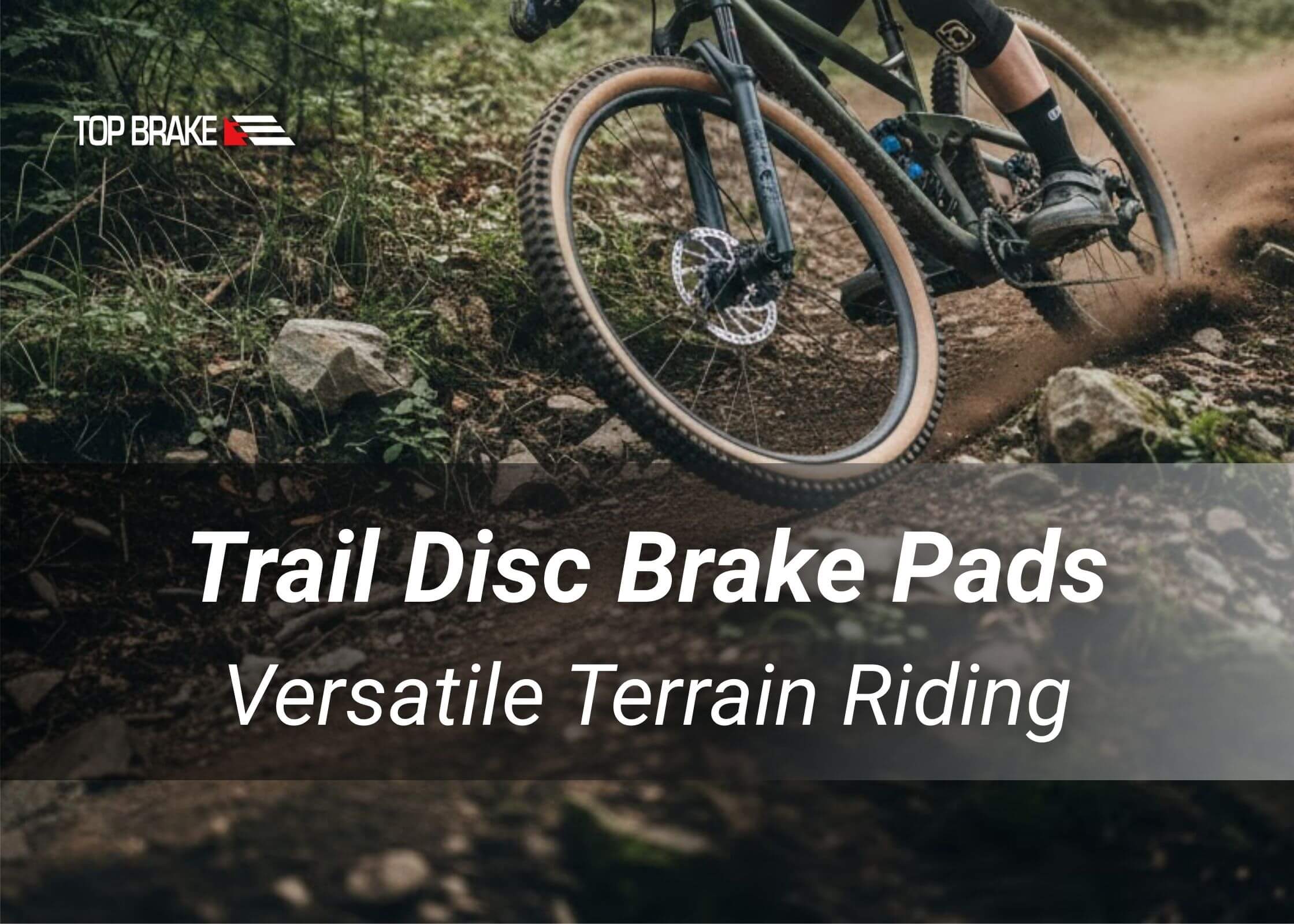
In the hierarchy of mountain biking disciplines, trail riding is arguably the most technically diverse category. Unlike the sustained, high-energy descents of downhill racing or the weight-obsessed focus of cross-country, trail riding demands a braking system that can adapt immediately to changing terrain. A single ride can include a steep, punchy climb followed by a rapid, technical descent through wet roots and dry rock.
For these riders, performance is defined by three non-negotiable metrics: modulation, low noise, and thermal stability.
Trail Riding vs. Other Disciplines: Technical Distinctions
To understand the specific braking requirements of a trail rider, we must compare it to the primary surrounding disciplines: Cross-Country (XC), Enduro, and Downhill (DH).
Trail Riding
-
Focus: Versatility and technical proficiency.
-
Terrain: A balanced mix of climbs and technical singletrack. Trails often feature roots, rock gardens, and sustained descents that are more aggressive than XC but less extreme than Enduro.
-
Braking Demand: Moderate to high intensity. Trail riders require consistency. The brakes must function perfectly during a surprise technical descent after a long climb.
Cross-Country (XC)
-
Focus: Weight optimization and aerobic efficiency.
-
Terrain: Primarily smooth or rolling paths with less aggressive vertical drops.
-
Braking Demand: Frequent but low-intensity. XC riders prioritize lightweight rotors (160mm) and often utilize standard organic pads for their immediate response and minimal weight.
Enduro and Downhill (DH)
-
Focus: Maximum speed on steep, technical descents.
-
Terrain: Highly aggressive, gravity-focused tracks with significant drop-offs and sustained high-speed sections.
-
Braking Demand: Extreme. These riders generate massive thermal energy, requiring larger rotors (200mm+) and compounds like the GraphEx series that can dissipate heat rapidly to prevent system failure.
Trail Riding Environment: A Friction Challenge
Trail riding often occurs in the “transition zone” of friction dynamics. Braking events are frequent but intermittent. This creates a specific challenge: the pads must provide an immediate “cold bite” without requiring the extensive warm-up cycles associated with sintered metallic pads, yet they must also resist glazing when a descent lasts longer than anticipated.
The Problem with Traditional OE Sintered Pads
Many trail bikes come equipped with standard sintered (metallic) pads. While durable, these are often suboptimal for versatile trail use due to:
-
High Acoustic Output: The high metal content causes resonant vibration (squeal) in dry conditions.
-
Aggressive Rotor Wear: Sintered particles can be unnecessarily abrasive during low-intensity riding.
-
Narrow Operating Window: They often require significant heat to reach their peak friction coefficient.
Technical Analysis: Performance Series Matrix
The Top Brake Performance Series was specifically engineered to address the “missing middle” in trail braking. Rather than relying on a simple resin-binder system, the Performance Series utilizes a composite matrix of KEVLAR® and high-grade ceramics.
KEVLAR® Reinforcement
The inclusion of KEVLAR®, a para-aramid synthetic fiber, is a deliberate engineering choice. Within the friction material, KEVLAR® acts as a structural backbone that helps maintain pad integrity under high compressive loads, keeping lever feel firm and consistent rather than soft or “mushy.” Its relatively low thermal conductivity also helps limit heat transfer into the caliper and brake fluid, braking performance on long, demanding descents.
Ceramic Matrix Stability
The ceramic components in the Performance Series establish a stable friction foundation across a wide range of trail conditions. Unlike the organic fillers used in many entry-level resin pads, ceramic particles do not soften at typical braking temperatures, which helps maintain a more predictable feel at the lever. This contributes to improved thermal stability and reduces the likelihood of brake fade when riding extended, technical descents.
Empirical Performance Metrics
To validate the Top Brake Performance Series in a trail environment, we conducted comparative testing against standard OE Resin and OE Sintered pads. The following data represents averages from a 50km technical trail loop with 1,200m of elevation change.
| Metric | PERFORMANCE | Original brand (OE) |
|---|---|---|
| Friction Material | KEVLAR® & Ceramic | Sintered / Metal |
| Initial Brake Power | 5 | 4 |
| Bed In | 5 | 3 |
| Modulation | 5 | 4 |
| Durability | 3.5 | 4.5 |
| Heat Tolerance (Fading) | 4.5 | 5 |
| Silence – DRY | 5 | 4 |
| Silence – WET | 4 | 2 |
Achieving “Acoustic Comfort” in the Wild
One of the most common complaints among trail riders is brake squeal. This is not merely an aesthetic issue; acoustic vibration often indicates uneven material transfer or harmonic resonance within the brake system.
The Performance Series addresses this through Material Homogeneity. By ensuring that the ceramic and KEVLAR® particles are evenly distributed at a microscopic level, the pad establishes a smooth, consistent “transfer layer” on the rotor. This layer acts as a lubricant-friction interface, neutralizing the high-frequency vibrations that lead to noise. For the rider, this means a quiet ride that allows for better focus on the trail ahead.
The Expert Guide to Bedding-In for Trail Success
Even the most advanced friction material will underperform if not properly “mated” to the rotor. For trail riders, the bedding-in process is the most critical maintenance step.
Expert Installation Tip:
If you are switching from a metallic pad to the Top Brake Performance Series, use 90% isopropyl alcohol to strip the old metallic transfer layer from your rotors. This ensures the new KEVLAR®-Ceramic matrix can bond directly to the steel, preventing inconsistent ‘pulsing’ during braking.
-
Accelerate to a moderate speed (approx. 20-25 km/h).
-
Apply the brakes firmly and evenly until you reach a walking pace (do not stop completely).
-
Repeat this 15–20 times per wheel.
-
You will feel the “bite” increase as the transfer layer darkens the rotor surface.
Learn more about Bedding-in Process for MTB brake pads
Top Brake Perspective: Redefining the Trail Standard
From Top Brake’s perspective, a trail rider’s gear should feel invisible. You should not have to think about whether your brakes will be too cold for a sudden corner or too hot at the end of a descent.
The Performance Series represents our commitment to this invisibility. By evolving the standard organic pad into a high-performance KEVLAR-Ceramic composite, we provide the reliability of a racing pad with the quietness and ease-of-use of a recreational one. It is the modern baseline for riders who view the entire mountain as their playground.